Glitter, Giraffes, and Fried Chicken
Positive Parenting Story|Written by Pattamon Wattanawanitchakorn, Senior Program Manager
Mental health and well-being
Positive Parenting
Related content:
Positive ParentingThai kindergarteners define what love is to them, and why a classroom of university students is paying attention

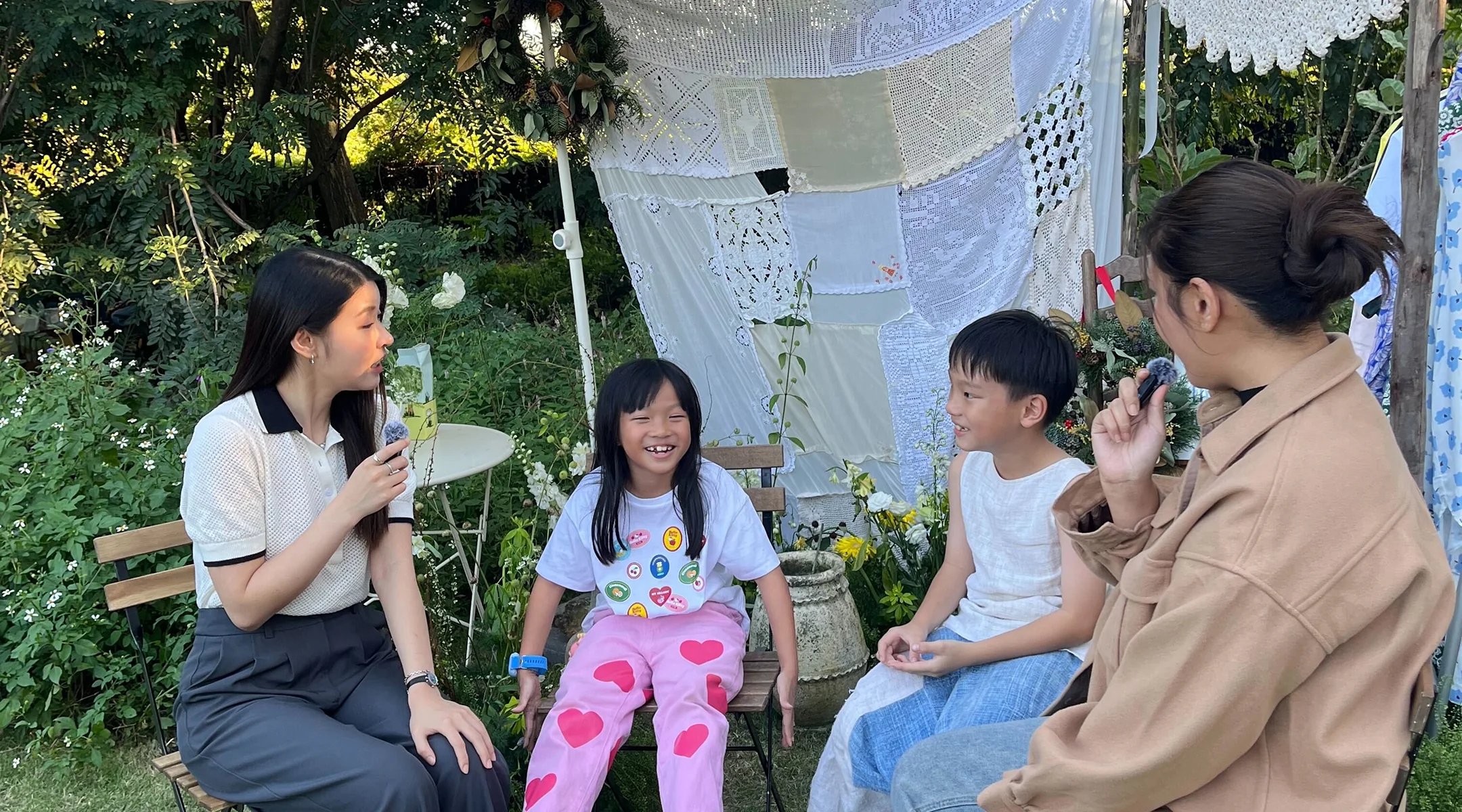
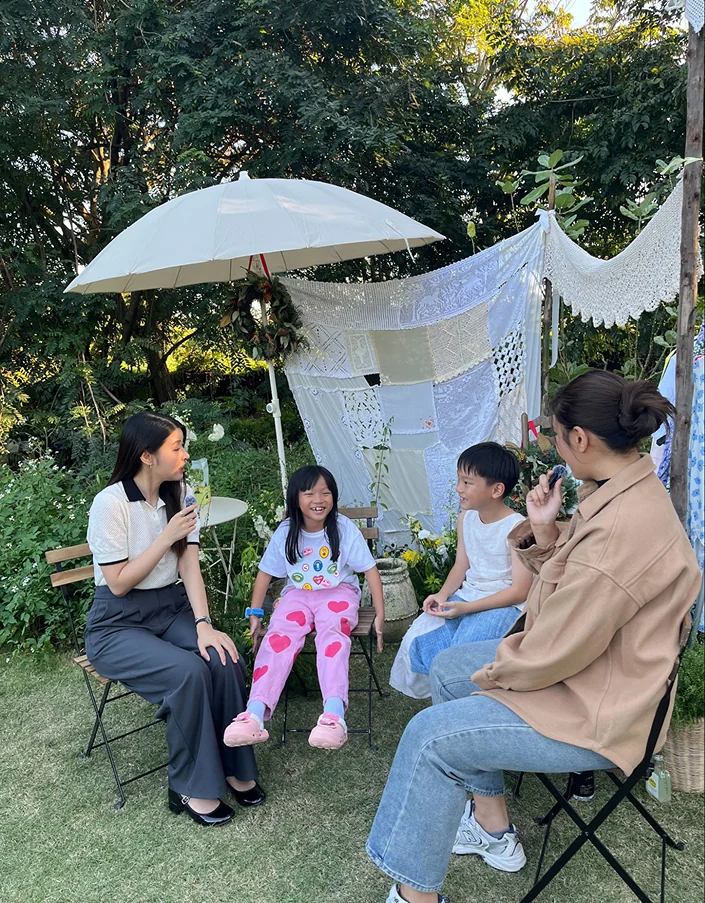
What is love?
“Glitter.” Kaochao smiles
“My mommy.” Linin whispers shyly
“My daddy.” Her sister adds
“It’s like loving an animal, loving a turtle or a cat.” Nop laughs
“Yes or a giraffe!” Her brother exclaims
“I feel loved when I eat fried chicken.” Haji ponders seriously
Each child innocently and adorably defines love in their own way, and their answers are more revealing than they first appear. At this age, children’s understanding of love and their perception of the world is already being shaped by the adults around them. It is formed through the accumulation of small, everyday actions that influence a child’s emotional and cognitive growth.
At the heart of this process is communication. According to Nutchanok (better known as Kru Nutt), a kindergarten teacher, it begins with giving children the language to express even the most basic feelings. Using analogies and metaphors like comparing emotions to colors or animals, can help children better identify and articulate what they feel.
“Being able to talk about your feelings with your child shows that this home is a safe place, even when you are tired or stressed.”
Kru Nutt explains. It takes a certain courage to be vulnerable to someone so small who looks up to you. Yet in doing so, parents model something powerful—a reassurance that we are all human and it is okay to have days when our colors feel a little darker.
In today’s fast-paced and digitally saturated world, this intentional presence becomes even more essential. It is easy to get caught up in constant stressors and distractions. However, children, like sponges, absorb more than we realize. They hold onto words and fleeting moments far longer than adults expect.
What did your parents say that you never forgot?
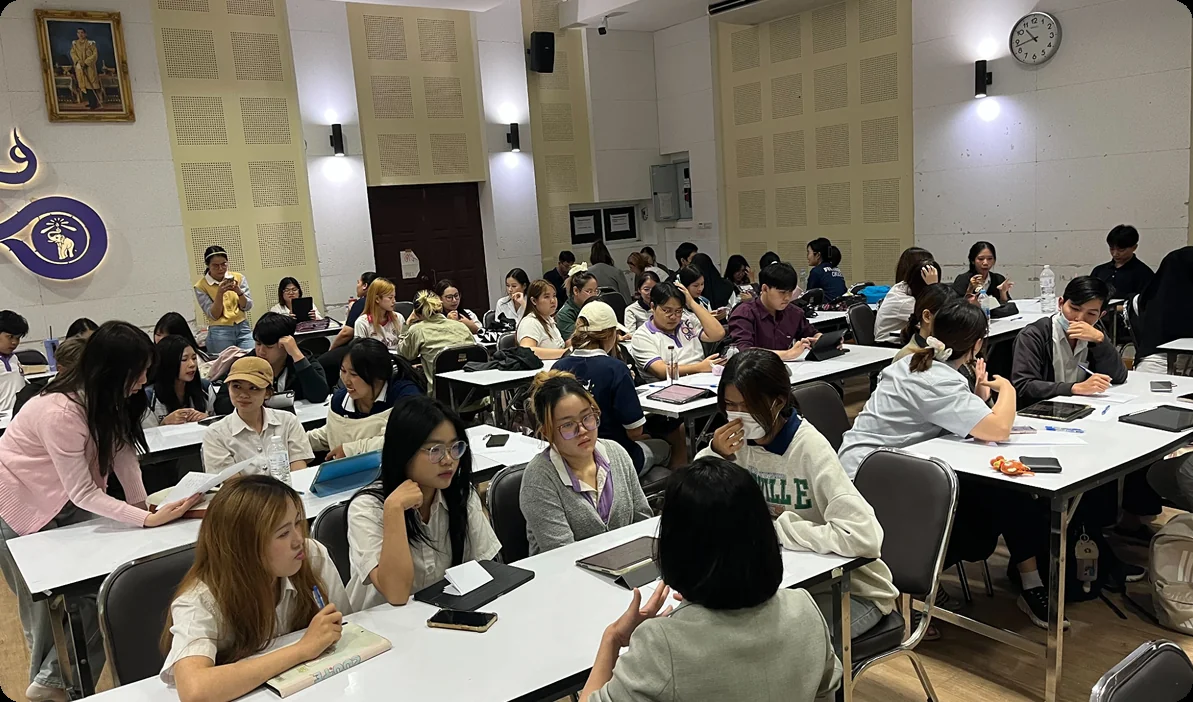
“I will always remember my mom telling me to do my best no matter the outcome,”
a first year Chiangmai University student shares during a joint Development Psychology and Psychology of Parenting class.
She is one of 75 psychology students gathered for a workshop in December 2025 on positive parenting, co-hosted by Chiang Mai University, and the Rajanagarindra Institute of Child Development. Most are in their late teens and early twenties, and none have children of their own. There is an initial irony in a room full of childless young adults gathering to discuss parenting, yet it fades as Professor Saengduean Yotanyamaneewong and Dr. Daranee Junla begin making the case for why parenting is a collective responsibility. The professors are two close research collaborators whose seamless synergy is impressive as they often finish each other’s sentences throughout the lecture.
“You’re going to grow old one day,” they remind the class, “and it will be the beta and alpha generations who ensure our survival in an aging society.” In other words, the qualities we hope to see in the future, are the values we need to nurture in our culture today.

Basic needs come first
Yet translating that understanding into reality is not simple. Structural challenges complicate who receives support and who is left behind. For example, it is often difficult to reach highly disadvantaged people in marginalized areas or areas affected by conflicts where survival is a priority and parenting secondary. In separate interviews conducted during the research phase of the campaign for a policy brief, two voices working closest to the problem describe what gets in the way.
“Basic needs come first and parenting becomes neglected.” a director of a child psychiatry hospital shares. Parenting support is uneven, often failing those who need it most while overlooking those outside formal systems.
Even recognizing parenting as a national priority remains difficult.
“Making parenting a national agenda is challenging because the mental health impact on children and teenagers is not always visible and takes time,”
explains a mental health specialist. “Even when there is evidence, it is often deprioritized because the economic benefits are not as immediate or obvious.”
In a political climate driven by urgency and measurable outcomes, the long-term work of nurturing a child can seem intangible. But its consequences of shaping resilient individuals, compassionate communities, and a healthier society, are profound.
Which is why big impacts can begin with small actions. Back in the workshop, the students begin to see themselves not just as future parents, but as active participants in shaping culture. Drawing on their creativity and digital fluency, they design parenting campaigns aimed at their peers. As young people, they understand their audience and are uniquely positioned to inspire others to care.
Parenting is what children remember. It is what students carry forward into the classroom. It is the potential to turn advocacy into policies, and ultimately into the kind of world they will one day build. Be it glitter, or fried chicken, if parenting shapes how a child understands love, then investing in parenting is also an investment in what love could look like in the future.